

Medical Disclaimer
This article is provided for educational and informational purposes only and does not constitute medical advice. References to Modafinil for Brain Fog are intended to explain research context and commonly discussed user experiences, not to recommend treatment. Modafinil is a prescription-only eugeroic (wakefulness-promoting) medication and is not approved for treating “brain fog,” which is not a clinical diagnosis. Using Modafinil without medical supervision may involve risks, including cardiovascular strain, sleep disruption, mood changes, or substance interactions. Always consult a qualified healthcare professional to identify the underlying cause of cognitive symptoms before considering any intervention.
Modafinil for Brain Fog is increasingly discussed by people who feel mentally slowed, unfocused, or cognitively drained. Brain fog can make everyday thinking harder than it should be, especially when work, study, or recovery demands stay high.
Brain fog is not a medical diagnosis. Instead, it reflects a pattern of reduced mental clarity that often appears when sleep, stress, or recovery falls out of balance. Because Modafinil is known as a wakefulness-promoting agent, many users explore Modafinil for Brain Fog in productivity and focus-related conversations.
This guide explains what brain fog is, why it happens, what research says about Modafinil and cognition, and what users commonly report—without hype, medical claims, or dosage advice.
What Is Brain Fog?
Brain fog is an everyday term used to describe cognitive dullness rather than a specific disease. People often experience it as slower thinking, weaker concentration, and reduced mental stamina.
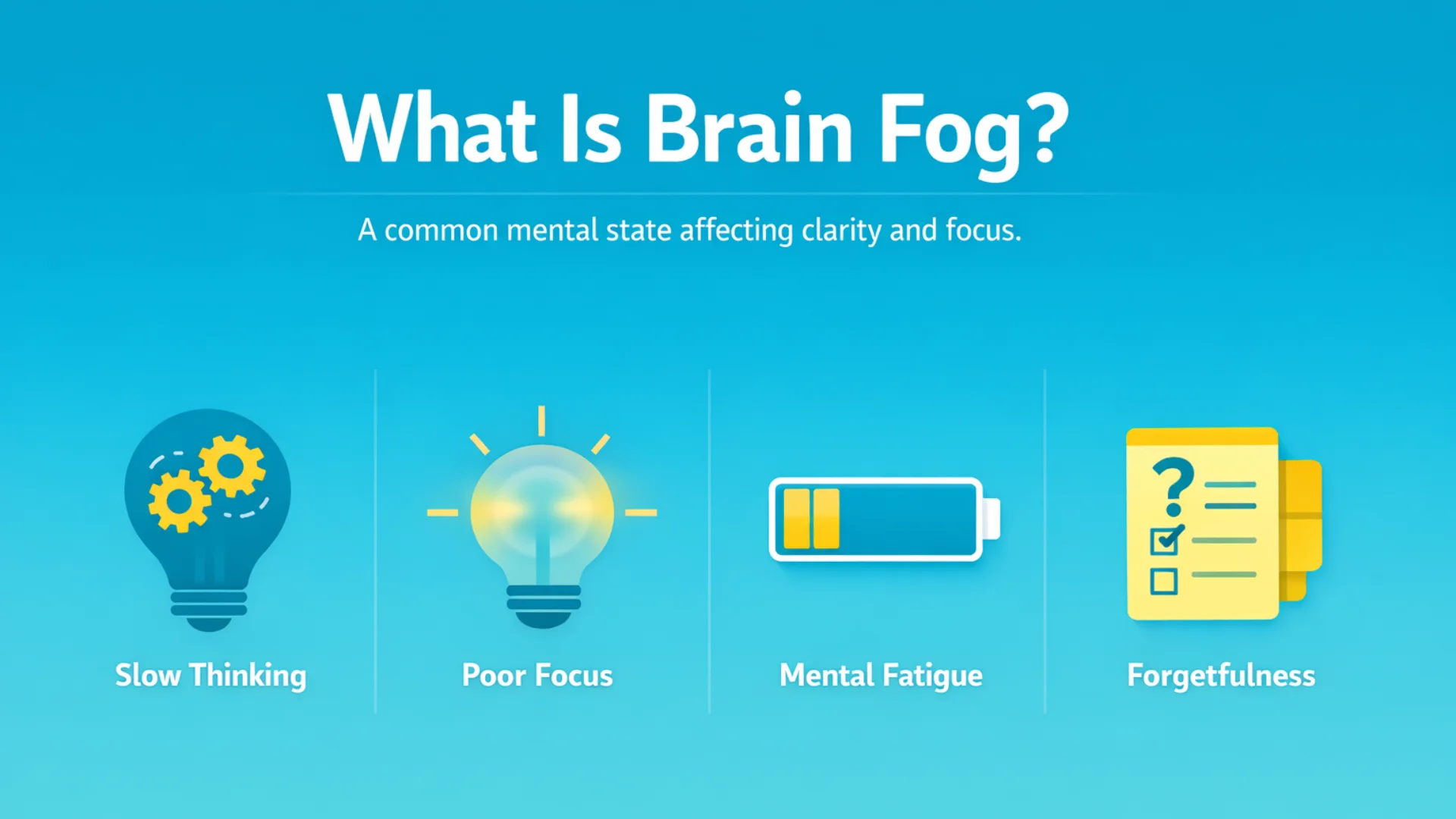
According to consumer health sources, brain fog and cognitive symptoms describe subjective changes in attention, memory, and clarity rather than a single clinical condition. These experiences vary widely from person to person.
Research literature also describes brain fog as a non-specific cognitive complaint, particularly when executive function or sustained attention feels reduced rather than absent. In other words, the brain still works—but not at full efficiency.
Common Symptoms of Brain Fog
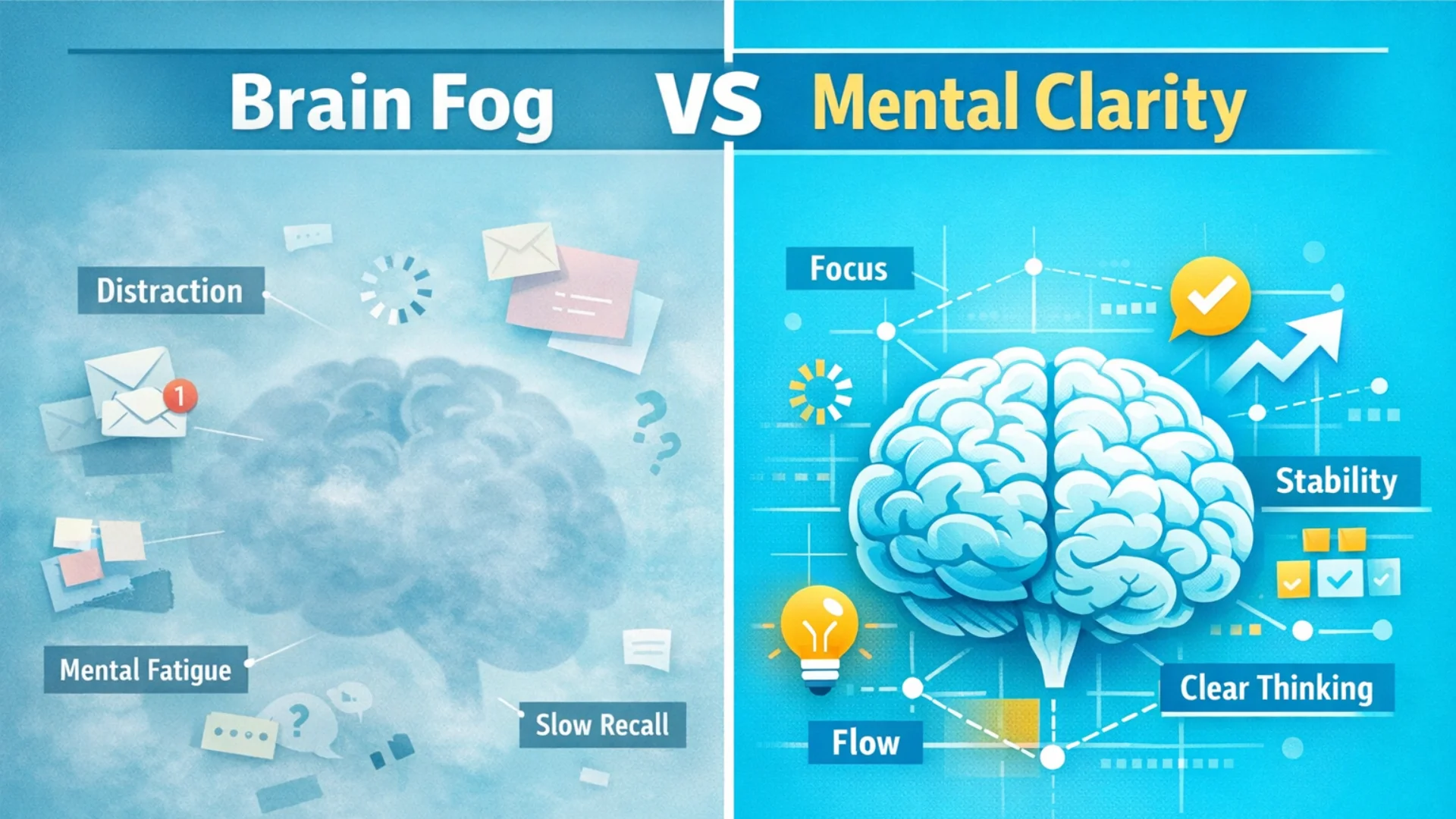
Brain fog tends to affect cognition in subtle but disruptive ways. Commonly reported symptoms include:
- Difficulty focusing on tasks or conversations
- Slower recall, such as forgetting names or words
- Reduced mental stamina during long work sessions
- A cloudy or detached mental feeling
- Increased distraction and frequent task-switching
These symptoms often fluctuate. For example, sleep quality, workload, hydration, and stress levels can all change how brain fog feels from one day to the next.
Why Brain Fog Is Becoming More Common
Modern routines quietly work against mental clarity. Constant notifications, irregular sleep schedules, long screen exposure, and high cognitive demands place continuous strain on attention systems.
Additionally, recovery after illness, prolonged burnout, or inconsistent daily routines can extend cognitive fog longer than expected. As a result, searches related to brain fog causes and symptoms continue to rise across productivity and health-focused audiences.
What Causes Brain Fog?
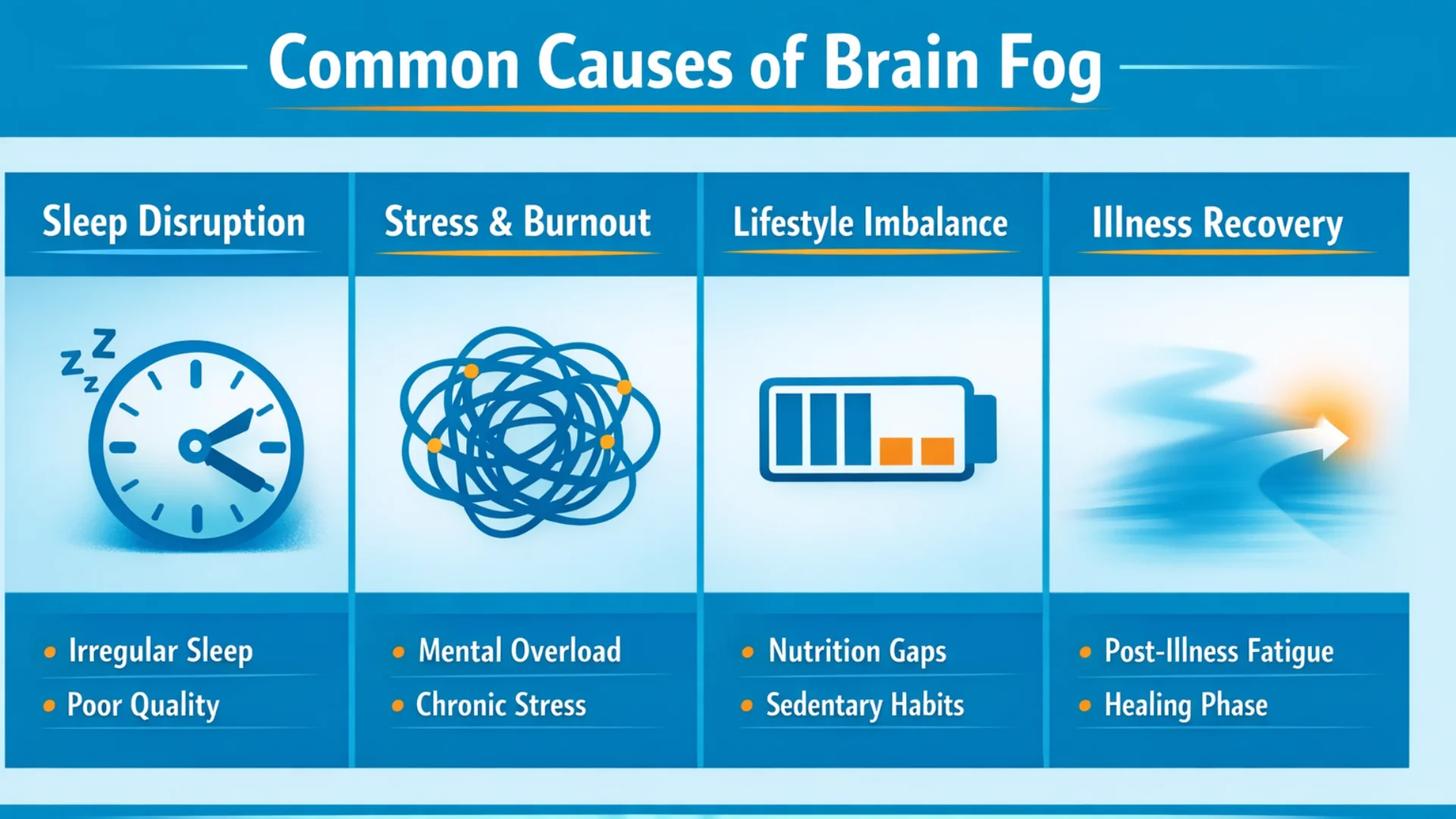
Brain fog rarely has a single cause. Instead, it usually develops from overlapping lifestyle, recovery, and workload factors.
Sleep Deprivation and Circadian Disruption
Sleep loss remains one of the strongest contributors to brain fog. Even when total sleep time appears sufficient, irregular sleep timing can reduce attention, reaction speed, and working memory.
Research consistently shows a strong link between sleep deprivation and cognitive performance. As sleep debt builds, executive function declines, and mental clarity drops.
This connection explains why Modafinil for Brain Fog often appears in discussions about disrupted schedules. A related internal resource is Modafinil for Shift Work Sleep Disorder – Tips and Advice, which explores alertness challenges tied to irregular work hours.
Stress, Burnout, and Cognitive Overload
Chronic stress does not only affect mood. It also reduces attention stability and mental endurance. Over time, burnout makes it harder to initiate tasks, sustain focus, and manage complex thinking.
Because of this, many users frame Modafinil for Brain Fog as a productivity or focus-support option rather than a solution for stress itself. Comparisons with other focus-related compounds appear in Modafinil vs Vyvanse: Which One Works Best for Focus and Productivity?, which examines differences in context and user experience.
Illness Recovery and Lifestyle Factors
After infections, prolonged inactivity, or inconsistent routines, people often notice lingering mental fog. Hydration, nutrition, sunlight exposure, and regular movement all influence how quickly cognitive clarity returns.
If brain fog becomes persistent, worsens over time, or appears alongside other concerning symptoms, professional medical evaluation remains appropriate to rule out underlying causes.
How Modafinil Works in the Brain
Modafinil is typically described as a wakefulness-promoting agent rather than a traditional stimulant. Discussions around Modafinil for Brain Fog usually focus on alertness and sustained attention rather than short-term energy spikes.
Wakefulness-Promoting Mechanisms
At a high level, Modafinil supports neural systems involved in wakefulness and arousal. Because of this, it often appears in conversations about productivity, focus, and performance during sleep disruption.
A broader overview of this framing appears in Modafinil: The Smart Drug for Enhancing Cognitive Performance and Boosting Productivity
Neurotransmitters and Mental Alertness
Rather than acting on a single pathway, Modafinil influences multiple signaling systems related to attention and motivation. This multi-system activity helps explain why experiences vary widely based on sleep quality, caffeine intake, and stress levels.
A detailed clinical explanation is available in an NCBI clinical overview of modafinil, which outlines mechanisms, approved uses, and limitations.
Scientific Perspective on Modafinil for Brain Fog
From a research standpoint, it’s important to separate wakefulness support from true cognitive enhancement. Research on modafinil cognitive enhancement focuses primarily on attention, reaction time, and executive function, especially under conditions of sleep loss.
Research on Attention and Executive Function
Studies suggest Modafinil can help maintain wakefulness and attention during sleep deprivation. In these contexts, it may reduce performance decline rather than create broad cognitive enhancement. This effect is reviewed in an NCBI analysis of modafinil and attention.
What Studies Do and Don’t Claim
Importantly, research also shows that Modafinil does not universally enhance cognition in healthy, well-rested individuals. Outcomes tend to be task-specific and context-dependent, as discussed in NCBI findings on mixed cognitive outcomes.
Therefore, Modafinil for Brain Fog should be viewed as wakefulness support rather than a solution for underlying causes.
User-Reported Experiences with Modafinil for Brain Fog
Online discussions often explore Modafinil for Brain Fog in work, study, and high-demand schedules. These reports remain anecdotal, not clinical outcomes.
Focus, Mental Clarity, and Task Engagement
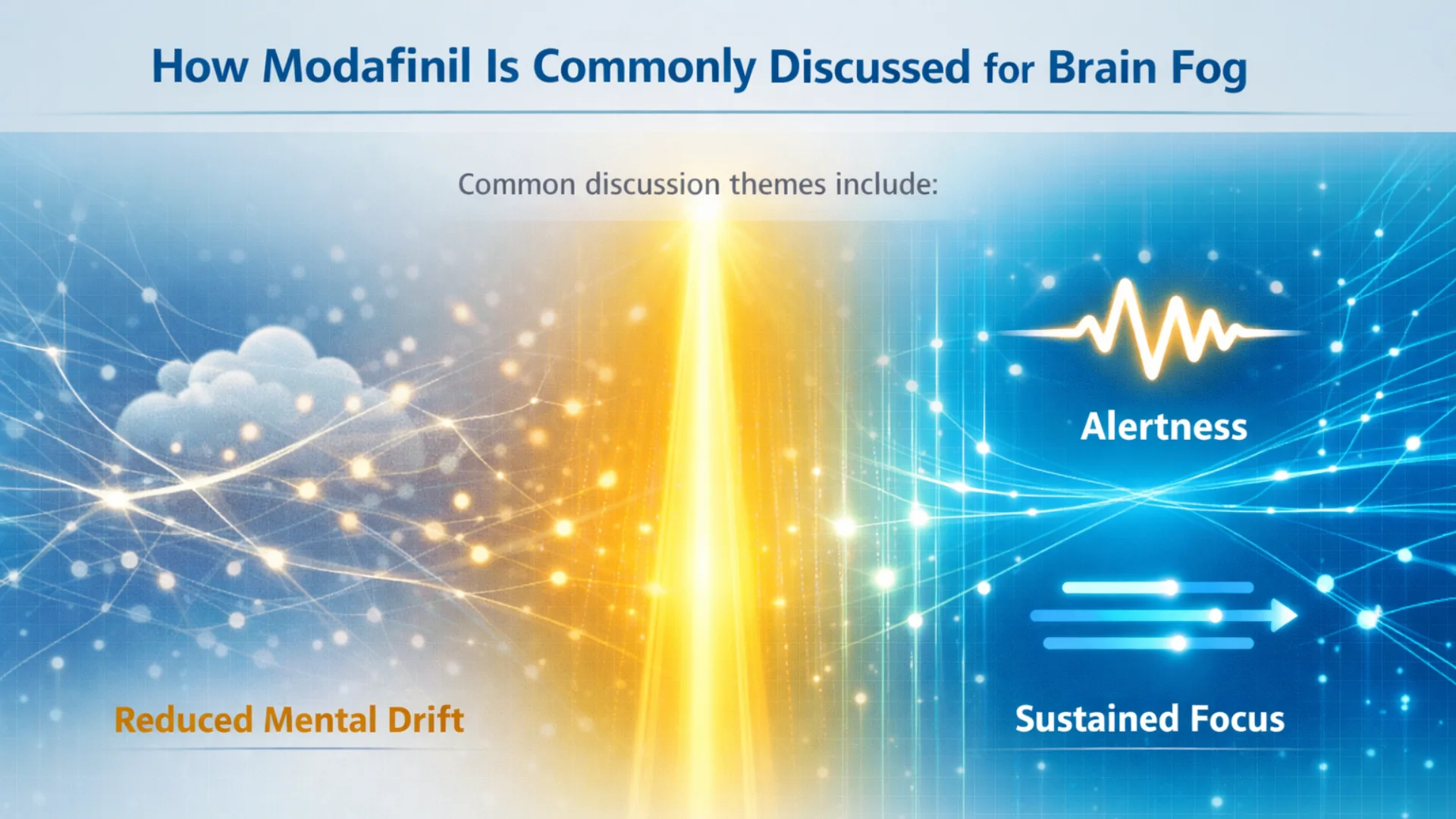
Users commonly describe:
- Easier task initiation
- Longer periods of sustained focus
- Reduced mental drift during demanding work
Others report anxiety, sleep disruption, or overstimulation. Individual response varies significantly.
A user-focused breakdown appears in Modvigil 200: A Closer Look at the Benefits, Reviews, and What You Should Know.
Safety Awareness and Responsible Information
Any discussion of Modafinil for Brain Fog should include safety awareness. Modafinil can affect sleep timing, appetite, and mood, particularly when layered on top of stress or inadequate rest.
Alcohol interactions are also relevant and are discussed in Modafinil and Alcohol: Risks, Interactions, and Safety Guidelines.
Why Modafinil Is Not a Cure for Brain Fog
For this reason, brain fog should be viewed as a signal rather than a standalone problem. Brain fog often signals deeper issues such as sleep debt, chronic stress, or recovery imbalance. If these drivers remain unresolved, wakefulness support may only mask symptoms rather than improve long-term clarity.
Sustainable cognitive improvement usually appears when foundational habits improve first.
Alternatives and Complementary Approaches
Sleep, Nutrition, and Cognitive Hygiene
Lifestyle-based strategies often provide the most reliable improvements, including:
- Consistent sleep and wake times
- Morning light exposure
- Caffeine boundaries
- Adequate hydration and protein intake
- Short movement breaks
- Single-task focus blocks
These approaches can reduce reliance on short-term focus tools.
FAQs
Brain fog often feels like mental cloudiness, slower thinking, forgetfulness, and reduced focus.
Some users report improved alertness and sustained attention, particularly during sleep loss. However, Modafinil for Brain Fog does not address underlying causes.
No. Modafinil supports wakefulness but does not treat the root drivers of brain fog.
Changes in sleep quality, stress load, hydration, and routine consistency often cause symptoms to fluctuate.
Conclusion
Brain fog is common, multifactorial, and often reversible. Modafinil for Brain Fog continues to attract interest because Modafinil supports wakefulness and attention, and some users report improved focus during demanding periods.
However, Modafinil is not a cure. The most responsible approach prioritises sleep, recovery, and informed decision-making first.
For informational reference on product authenticity and quality standards, readers often review Modalert 200 mg and Modacharge™ 200 mg by Modalerts.com.
Key Takeaways
- Brain fog reflects reduced clarity, not a single condition
- Sleep loss and stress are the most common drivers
- Modafinil for Brain Fog focuses on wakefulness, not root causes
- Research shows task-specific benefits, not universal enhancement
- Long-term clarity improves most with sleep and lifestyle fixes
Author Note
Greg Nicholl is a pharmaceutical specialist with over 20 years of experience in urology and systemic health, with a professional focus on cognitive performance, medication safety, and the pharmacological quality of generic medicines. His work emphasizes evidence-based evaluation of clinical research and manufacturing standards, including those of major producers such as Sun Pharma and HAB Pharma. Greg advocates for patient education, transparency, and harm reduction, helping readers understand how wakefulness-promoting agents interact with the human brain while encouraging informed, responsible decision-making.