

Interest in modafinil weight loss has grown in recent years as more people use the medicine for focus, long work hours, or better concentration. Many users say they feel less hungry, more alert, or more active during the day. As online discussions about smart drugs grow, people naturally ask whether these appetite changes are real, supported by science, or simply a side effect of staying focused for longer.
However, it is important to remember that Modafinil is FDA-approved only for sleep-related conditions, not for dieting or changing metabolism. Many misunderstandings come from treating reduced appetite as a weight-loss benefit. You can confirm its approved uses here:
👉 FDA – Provigil (Modafinil) Approval Page
This article explains what research says about Modafinil’s effects on appetite, metabolism, and energy levels, and it also clarifies where the evidence is still limited.
What People Mean by “Modafinil Weight Loss”
When people mention “modafinil weight loss,” they usually mean changes like reduced appetite, fewer hunger cues, or delayed meals. In many cases, people stay focused for long periods, so they eat later than usual. However, these changes come from behaviour rather than direct fat burning.
Reduced appetite
Fewer hunger cues
Increased focus leading to delayed meals
More hours spent awake and active
Anecdotal reports across various online communities describe users skipping meals unintentionally due to long periods of deep concentration. But anecdotal experiences are not scientific evidence, and reduced appetite does not automatically equal sustainable weight loss.
Key Takeaways:
- Most claims of weight loss come from appetite reduction, not fat burning.
- Behavioural changes (skipping meals due to focus) are often mistaken for metabolic effects.
- Modafinil is not recognized or approved as a weight-loss medication.
How Modafinil Works in the Brain and Why It Impacts Weight-Related Behaviors
Modafinil is a wakefulness-promoting medicine that works without the strong stimulant effects of amphetamine-based drugs. It affects brain chemicals linked to alertness, reward, and motivation. As a result, users may stay focused for longer periods, which can indirectly change eating habits. However, these effects come from changes in routine, not from any proven impact on metabolism.
Users exploring wakefulness-enhancing options often turn to trusted products such as Modalert 200mg:
Key Takeaways:
- Modafinil interacts with dopamine, orexin, and other neural pathways.
- These pathways indirectly influence appetite regulation.
- Reduced hunger is behavioral rather than metabolic.
Dopamine, Orexin & Appetite Pathways
Dopamine supports motivation, focus, and reward response. Modafinil’s dopamine-related actions may extend periods of concentration, unintentionally delaying hunger signals.
Orexin (hypocretin) is a neurotransmitter involved in both wakefulness and appetite control. Research suggests orexin plays a major role in regulating arousal and feeding behaviour.
👉 PubMed – Orexin & Appetite Regulation
Why Modafinil Makes Some Users Feel Less Hungry
Some users feel less hungry on Modafinil because they stay focused for long stretches, so they forget to eat or delay meals. In addition, increased alertness can mask normal hunger cues for a short time. However, this is a short-term effect and not a true form of metabolic change.
Long periods of intense focus → fewer meal breaks
Enhanced alertness → delayed hunger perception
Occasional mild stomach discomfort → temporary reduction in appetite
These experiences fall under Modafinil side effects appetite, not deliberate weight-loss benefits.

Does Modafinil Actually Suppress Appetite? Evidence From Research
Scientific studies give a nuanced answer to “does modafinil suppress appetite?” The evidence suggests that some people experience mild appetite reduction, but the effects are inconsistent and temporary.
Key Takeaways:
- Some short-term appetite reduction is documented.
- There is no evidence of meaningful metabolic enhancement.
- No health authority recognizes Modafinil as a weight-loss drug.
What Studies Show About Appetite & Calorie Intake
Small-scale research shows that Modafinil may reduce calorie intake for a few hours because users feel more alert and focused. But:
- Appetite typically returns when the medication wears off
- Effects vary between individuals
- No long-term weight impact is proven
More clinical context is available here:
👉 WebMD – Modafinil Side Effects
Modafinil’s Effect on Metabolic Rate and Daily Energy Use
Studies examining metabolic rate show:
- No significant increase in basal metabolic rate (BMR)
- No fat-burning effect
- Slightly increased activity levels due to extended wakefulness may burn a few more calories
- The effect is behavioural, not metabolic
In short, Modafinil promotes wakefulness, not metabolism.
Confirmed Modafinil Effects vs. Unproven Weight-Loss Claims
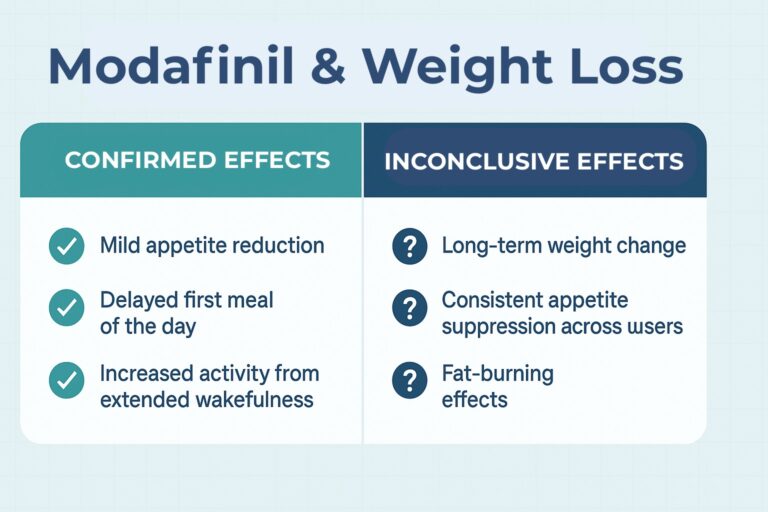
Research shows that Modafinil has some clear effects, while other claims remain uncertain. For example, it does influence alertness and hunger cues. However, long-term weight loss or strong metabolic changes are still not proven. This is why users should view appetite changes as temporary rather than reliable results.
Confirmed Findings:
Modafinil affects neurotransmitters tied to alertness and hunger cues
Users may unintentionally delay meals
Wakefulness can increase daily movement or activity
Inconclusive Areas:
Long-term weight changes
Consistent appetite suppression
Any therapeutic weight-loss value
Modafinil, Metabolism, and Daily Energy Levels
Most weight-related changes from Modafinil are rooted in behavioural patterns. Being awake longer or more active throughout the day can alter routines, including eating schedules.
Those seeking strong productivity support may consider:
👉 Modawake 200mg
Key Takeaways:
- Modafinil impacts alertness, not fat metabolism.
- Appetite changes come from altered behaviour.
- Healthy habits—not medications—dictate weight outcomes.
Safety Risks of Using Modafinil for Weight Loss
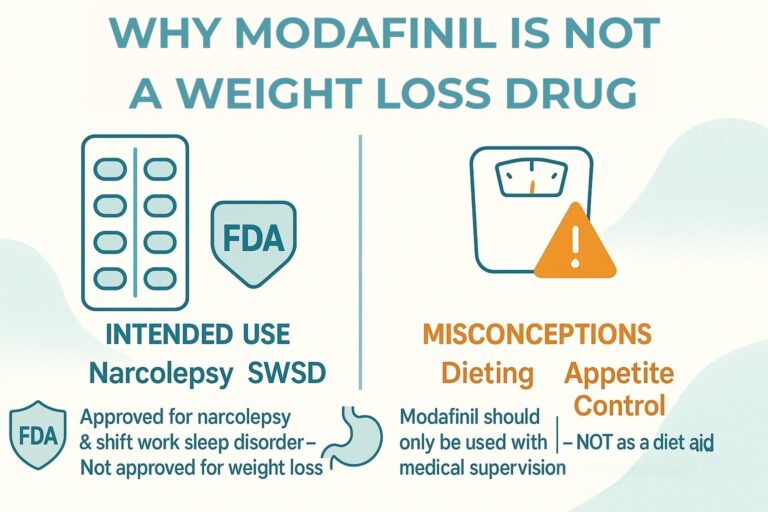
Using Modafinil for weight loss can lead to unsafe patterns. Appetite suppression is a side effect, not a goal.
Official FDA documentation again confirms Modafinil’s actual approved uses:
👉 FDA – Provigil (Modafinil) Approval Page
Key Takeaways:
- Modafinil is not a dieting or slimming medication.
- Using it for appetite suppression may be harmful.
- Medical guidance is essential for wakefulness medications.
Who Should Avoid Using Modafinil for Weight Loss
Modafinil should not be used for weight control by individuals with:
- Eating disorders
- Restrictive dieting habits
- Unrealistic expectations of stimulant-like weight loss
Key Takeaways:
- Modafinil is approved for narcolepsy, SWSD, and sleep disorders.
- Appetite suppression is not its purpose.
- Those prone to unhealthy eating patterns should avoid it.
Healthier and Safer Alternatives to Modafinil for Weight Management
Evidence supports strategies like:
- Consistent sleep routines
- Balanced nutrition
- Regular exercise
- Stress regulation
For users seeking better focus instead of weight loss, Modalerts.com offers wakefulness options:
Key Takeaways:
- Lifestyle changes outperform appetite suppression.
- Modafinil should be used for wakefulness—not diet goals.
- Productivity gains may indirectly support healthier habits.
FAQs
Not reliably. Appetite may reduce temporarily, but Modafinil is not an approved or effective weight-loss medication
Its effects on focus and alertness delay hunger cues, leading users to skip or postpone meals
No. Appetite suppression is a side effect and not a recommended use
It increases wakefulness but does not meaningfully change metabolic rate or promote fat burning.
Final Thoughts on Modafinil Weight Loss + Practical Action Steps
Online discussions about modafinil weight loss can be confusing, so it helps to look at the facts. Studies show that appetite changes are mild, short-term, and different for each person. As a result, any weight-related effect is more about daily habits than biology. Therefore, Modafinil should be used for alertness or productivity, not for dieting or weight control.
Actionable Steps:
- Maintain structured routines for sleep, meals, and focus
- Stay physically active
- Use Modafinil only for approved or productivity-related purposes
- Explore wakefulness-enhancing options such as:
- Modalert 200mg
- Modacharge 200mg
- Modawake 200mg
- Modalert 200mg
Not for weight loss or dieting.
Medical Disclaimer
The information in this article is for educational purposes only and is not intended to replace professional medical advice, diagnosis, or treatment. Modafinil and related medications should only be used under the guidance of a licensed healthcare provider. This article does not promote Modafinil for weight loss or any unapproved use. Always consult a qualified medical professional before starting, stopping, or modifying any medication.